Bangkok, Off-Season (In More Ways Than One)
Two days after a 7.7-magnitude earthquake in Myanmar sent tremors through Bangkok and brought down a single building under construction, airfares to Thailand dropped by roughly 75 percent and hotels by 60. I checked what I could find on the actual damage — one collapsed building, a city otherwise intact, a country well-practised in building for seismic risk — decided the trip was reasonable, and booked it. I had vacation days, no plans, and a cheap flight. That was enough.
I arrived with no itinerary at all, which is usually how I prefer it — wake up, have breakfast, decide from there. Bangkok had always been a transit point for me before: a single night on the way back from Koh Lanta a few years earlier, barely time to see anything. This was the first time I actually had a week to look at the city properly.
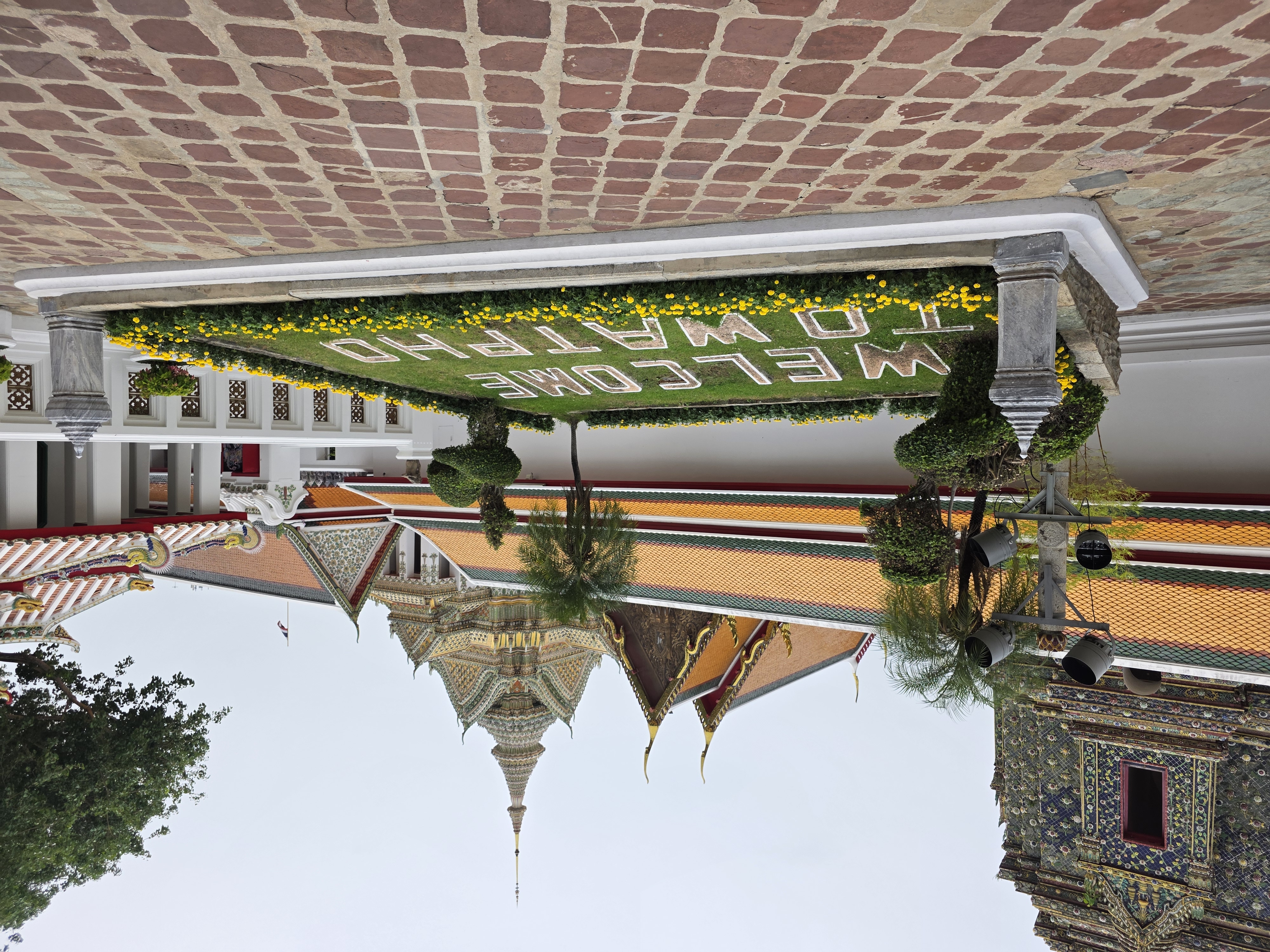
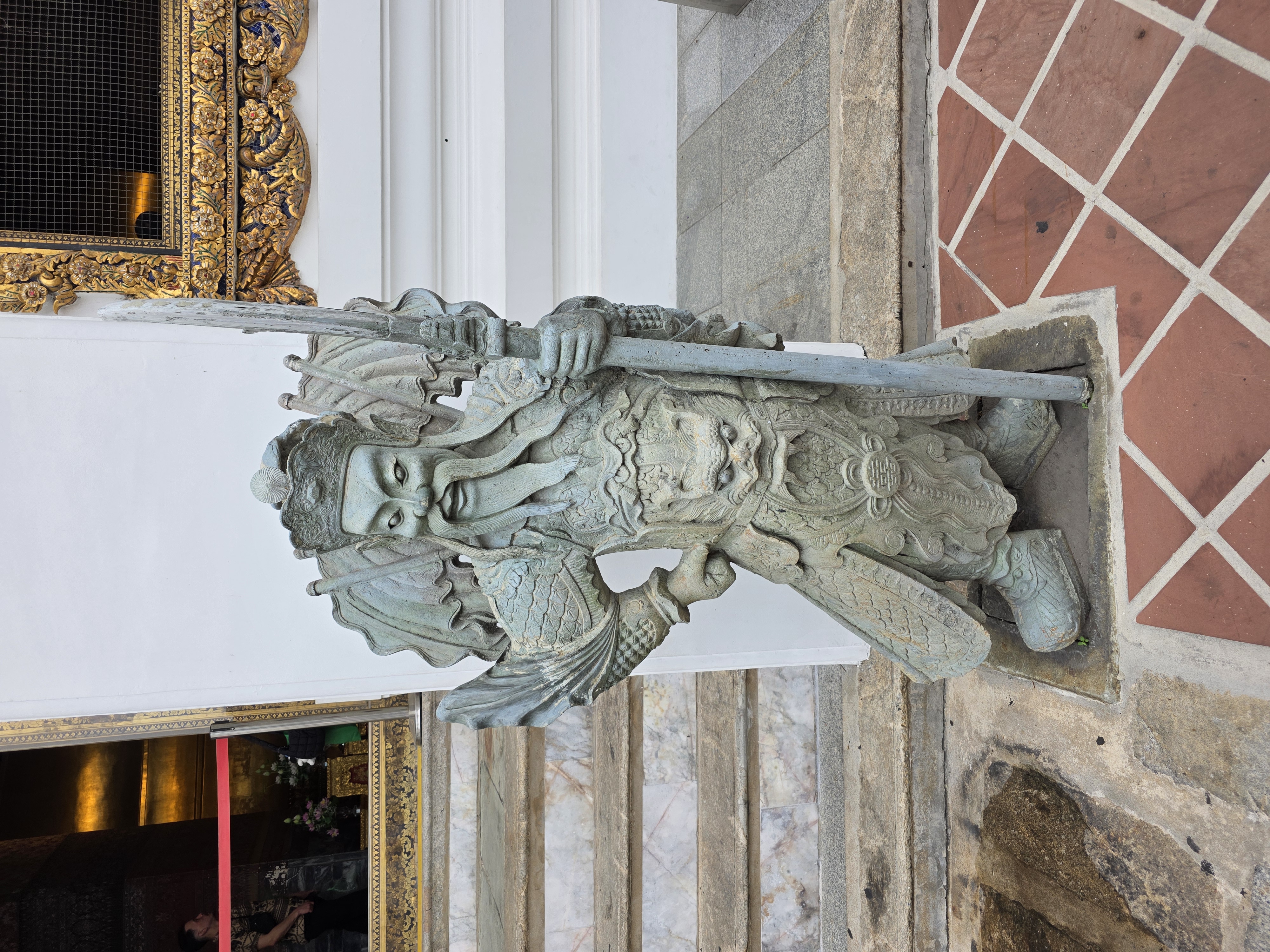
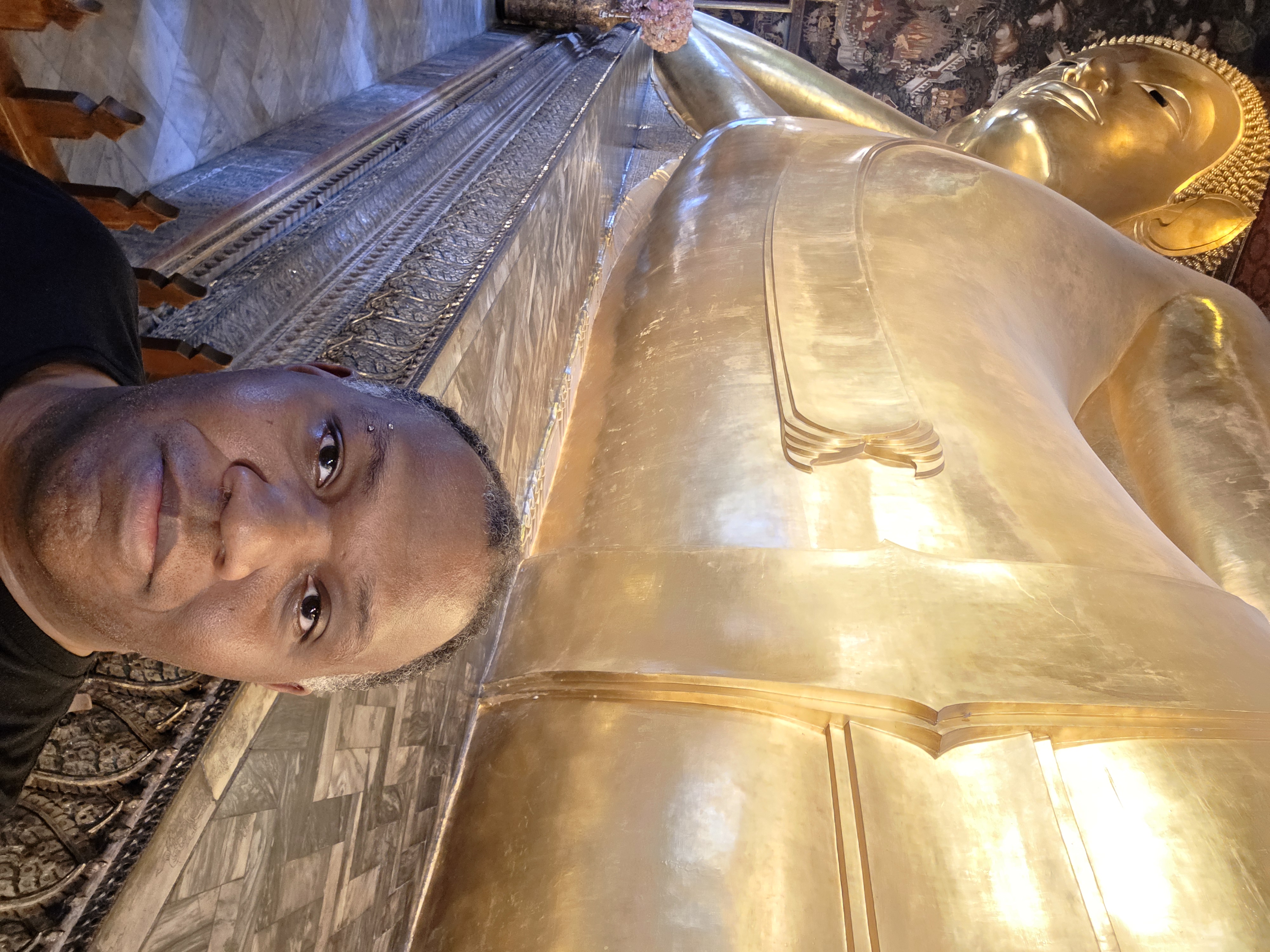
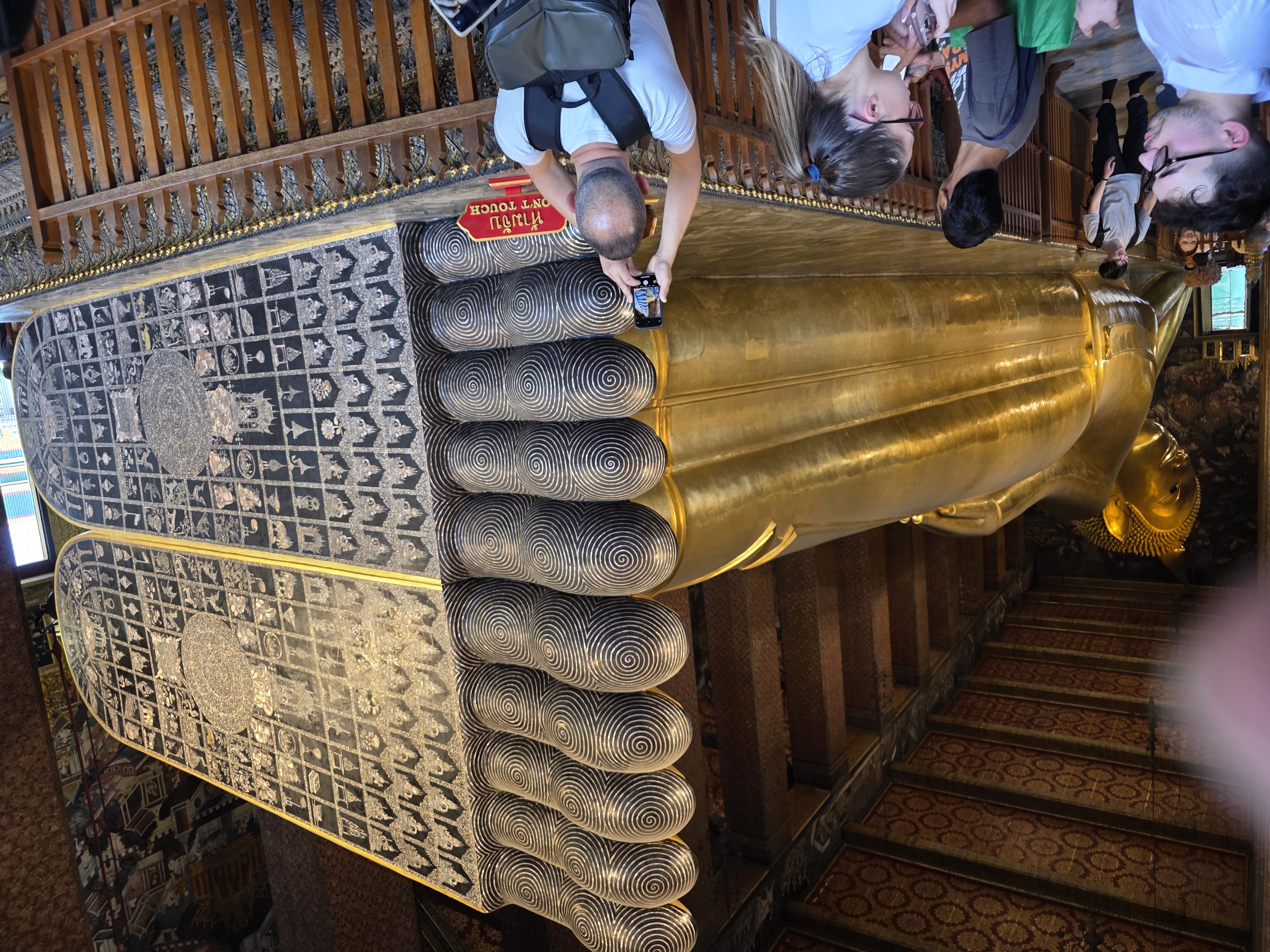
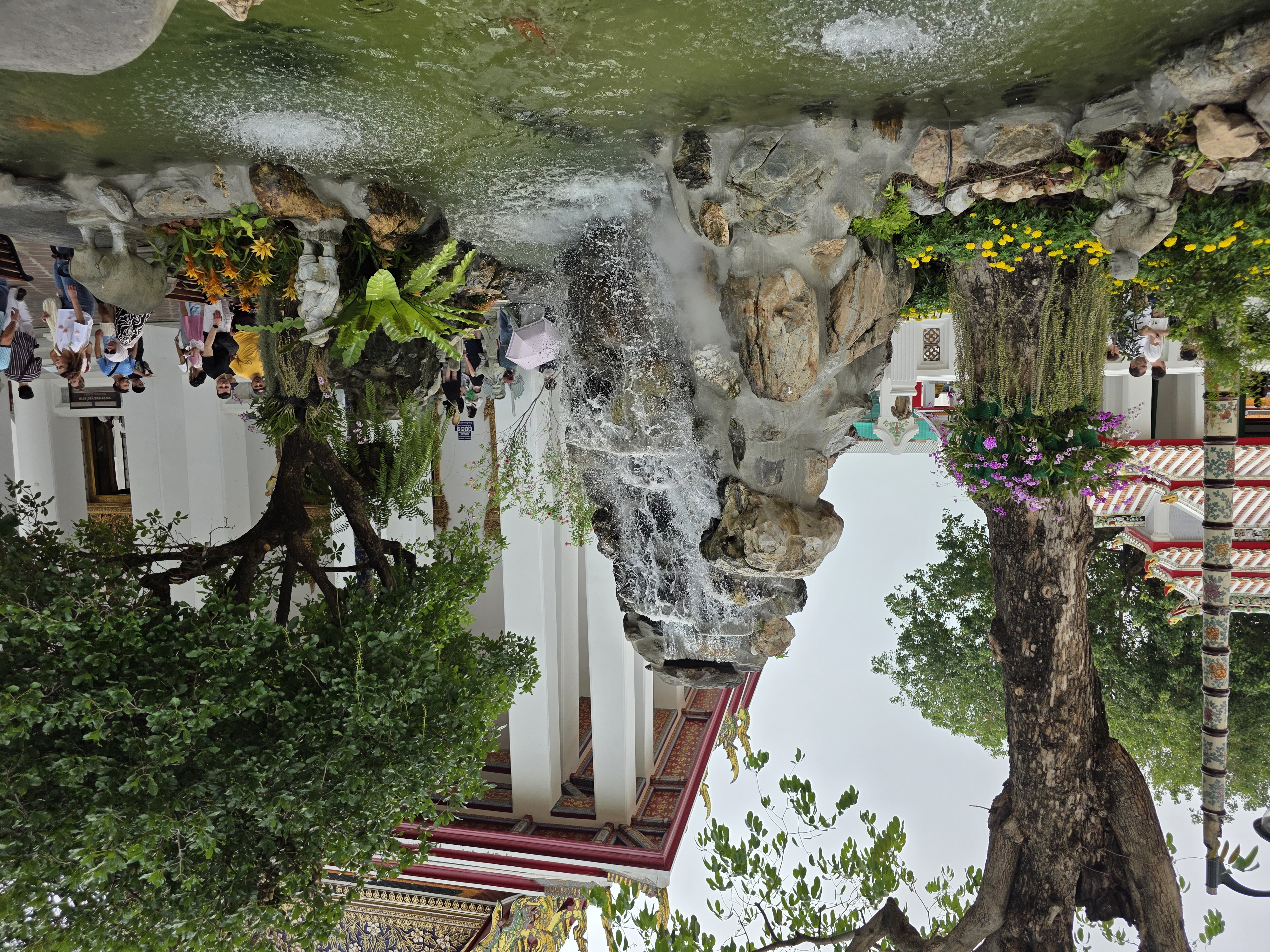
The first proper day out took me to Wat Pho — one of Bangkok's oldest and largest temple complexes, and home to one of the things I'd specifically wanted to see: the Reclining Buddha. The statue is genuinely enormous in a way that photographs don't quite prepare you for. It fills the entire length of its own building, 46 metres from head to foot, covered in gold leaf, the soles of its feet inlaid with 108 mother-of-pearl symbols. You walk alongside it rather than in front of it. The rest of the complex is worth taking slowly too — courtyards, pavilions, Chinese stone guardian statues lining the entrances, a garden with a working waterfall. I spent longer there than I'd planned.
.jpg)
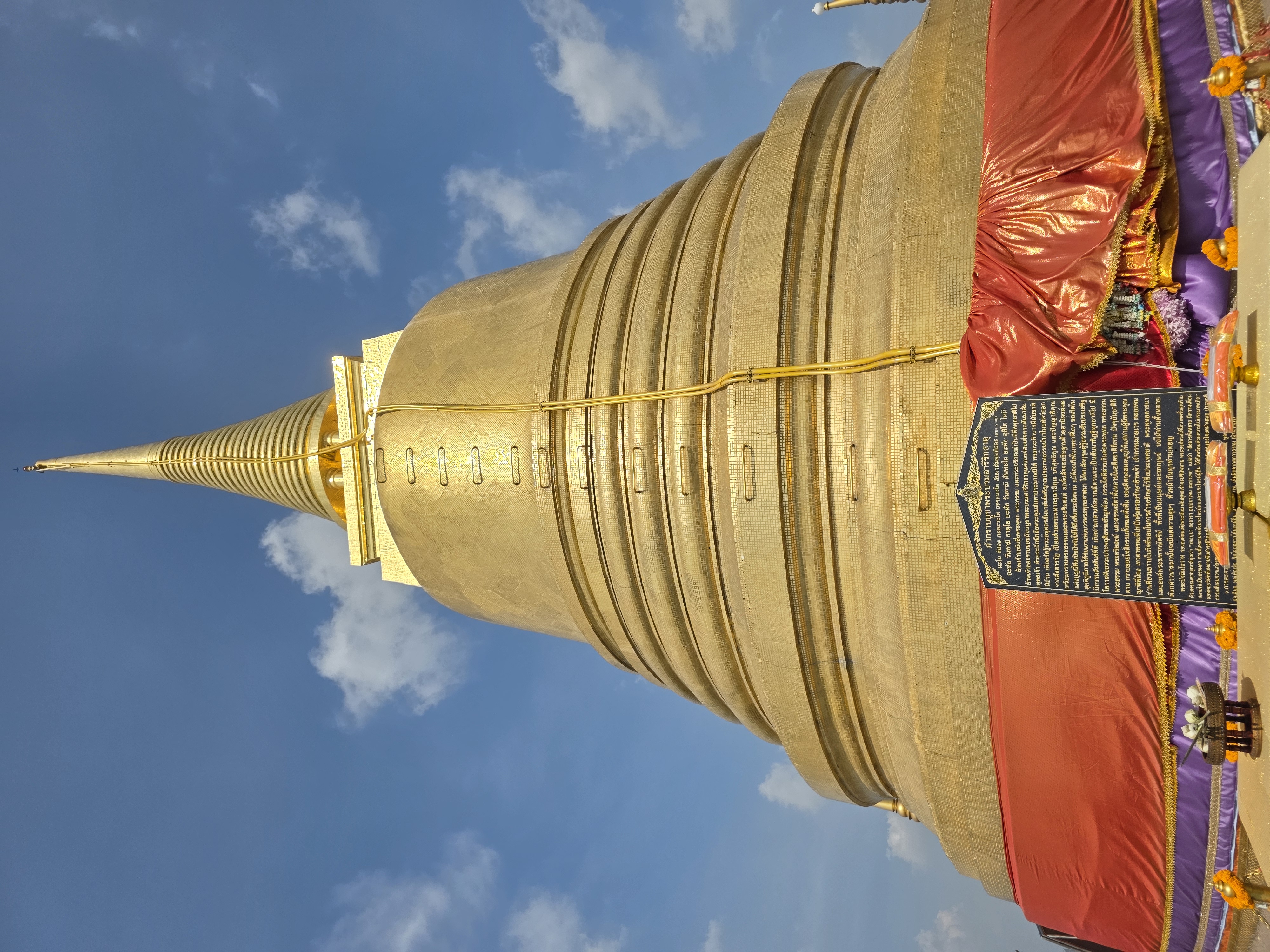
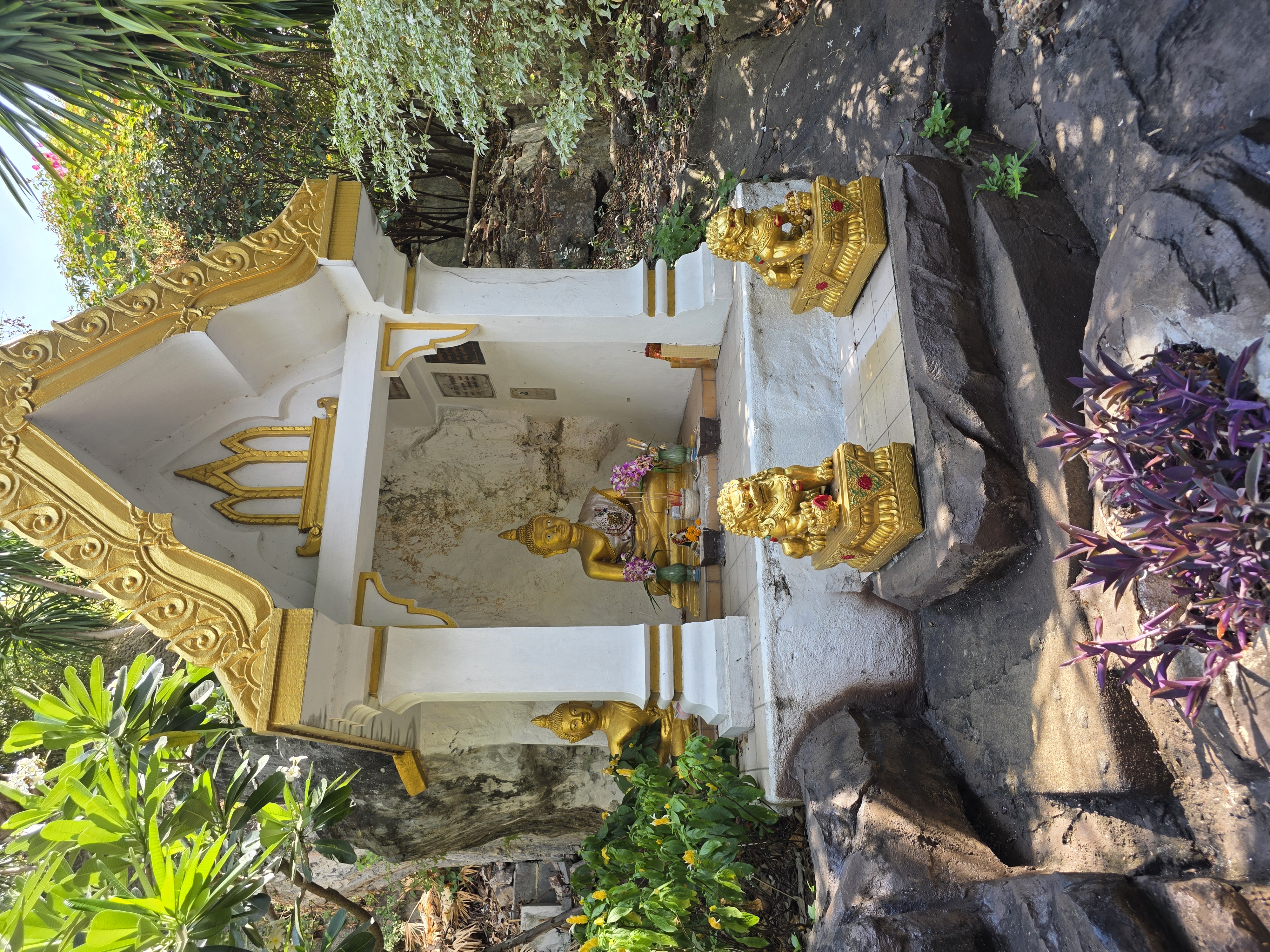
Another day brought a different part of the city — the Golden Mount at Wat Saket, a man-made hill topped with a gilded chedi that's been a Bangkok landmark since the nineteenth century. The climb is a long, spiralling path around the outside of the hill, past small shrines set into the rock, past the occasional cat, and past a lot of other people also making their way up in the heat. The view from the top is worth it — the whole of old Bangkok spread out in every direction.
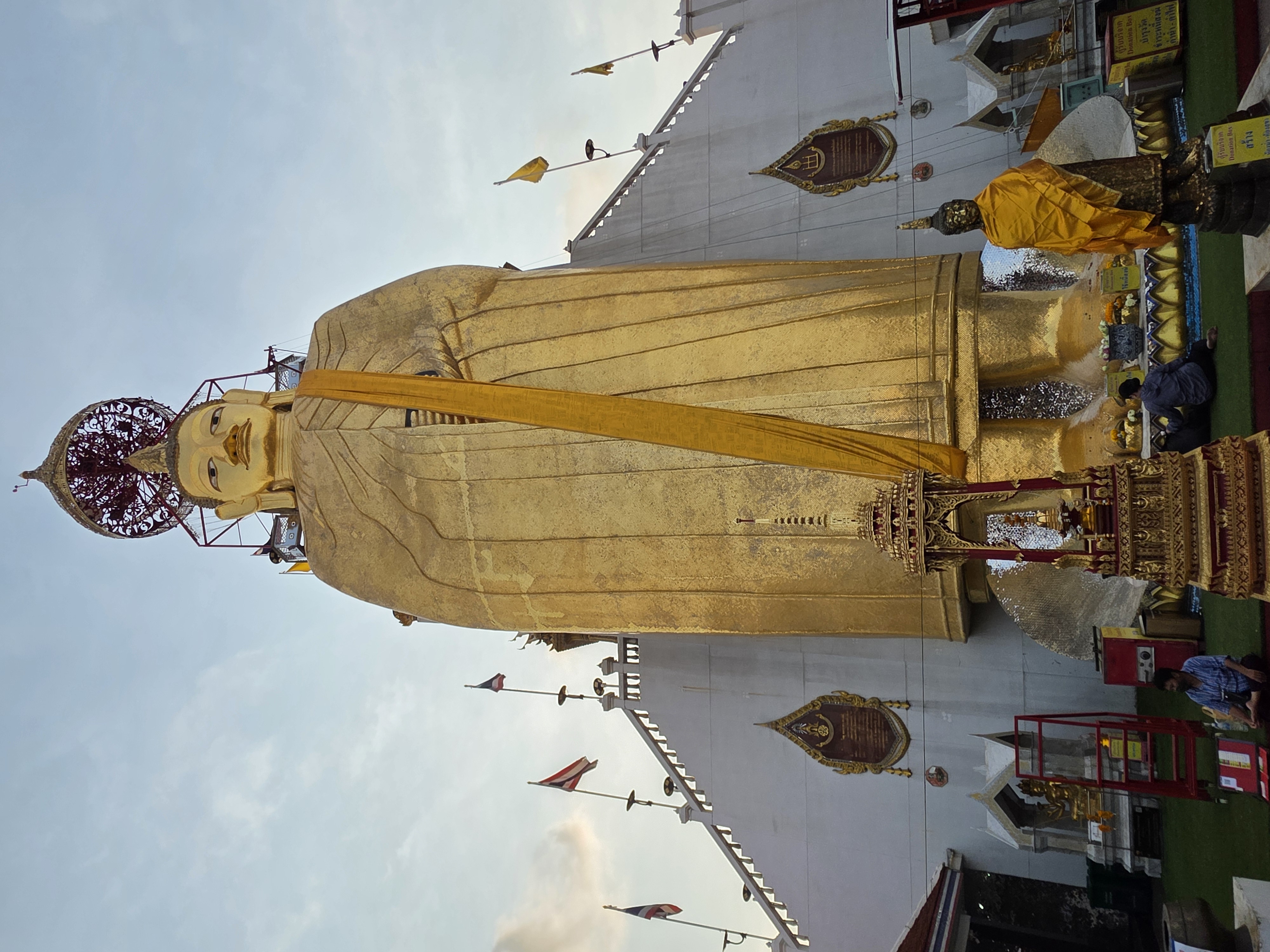
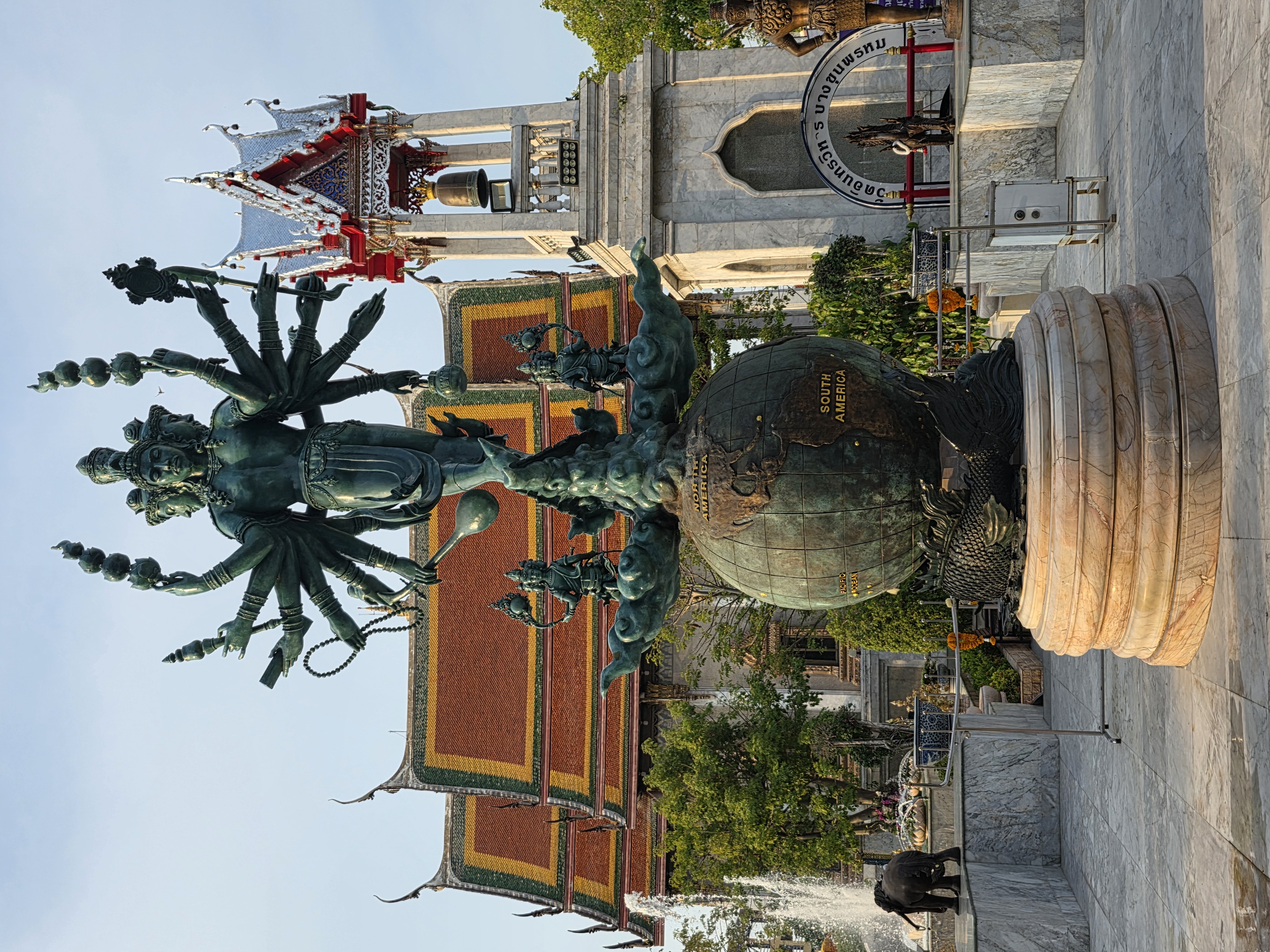
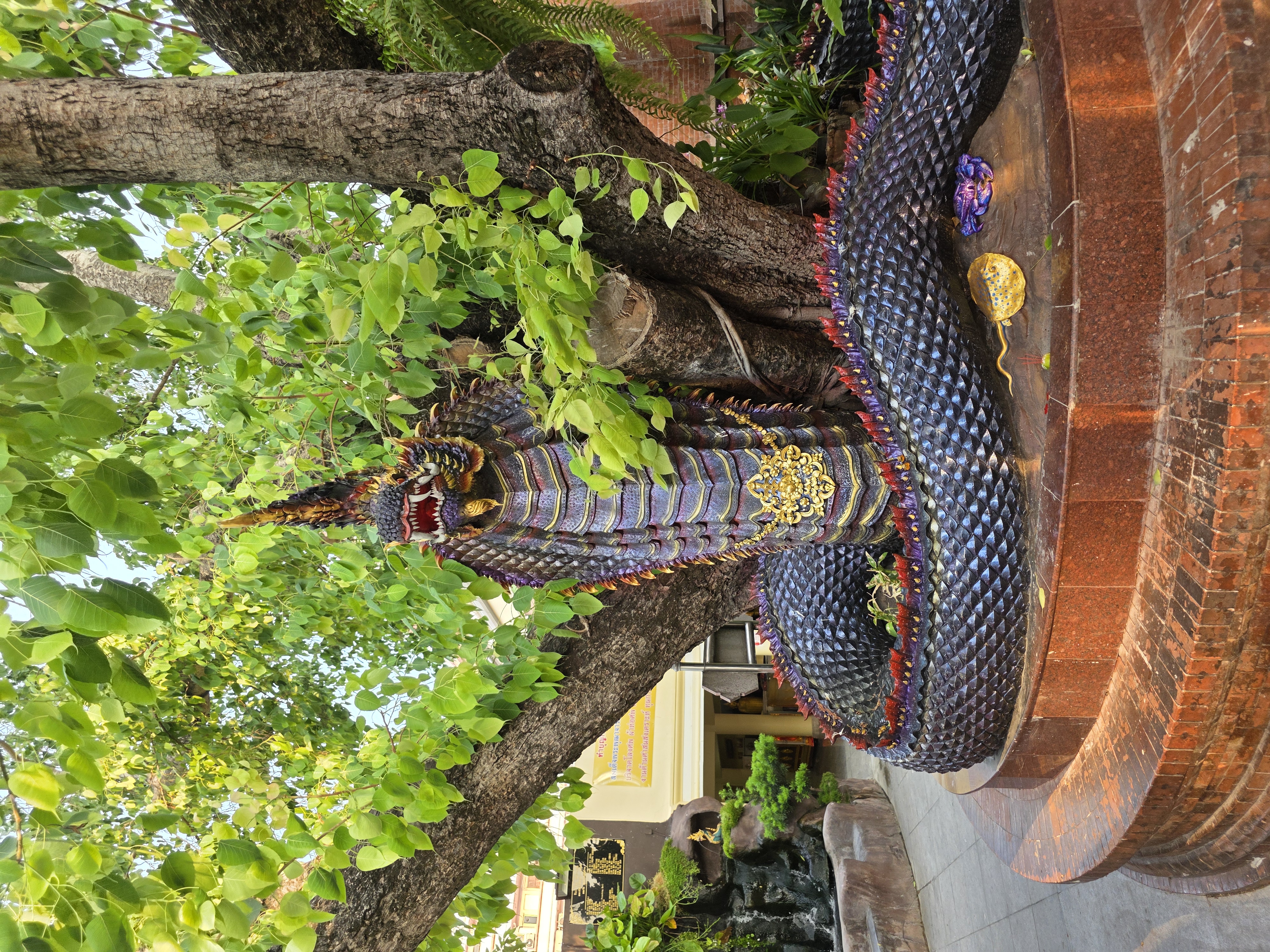
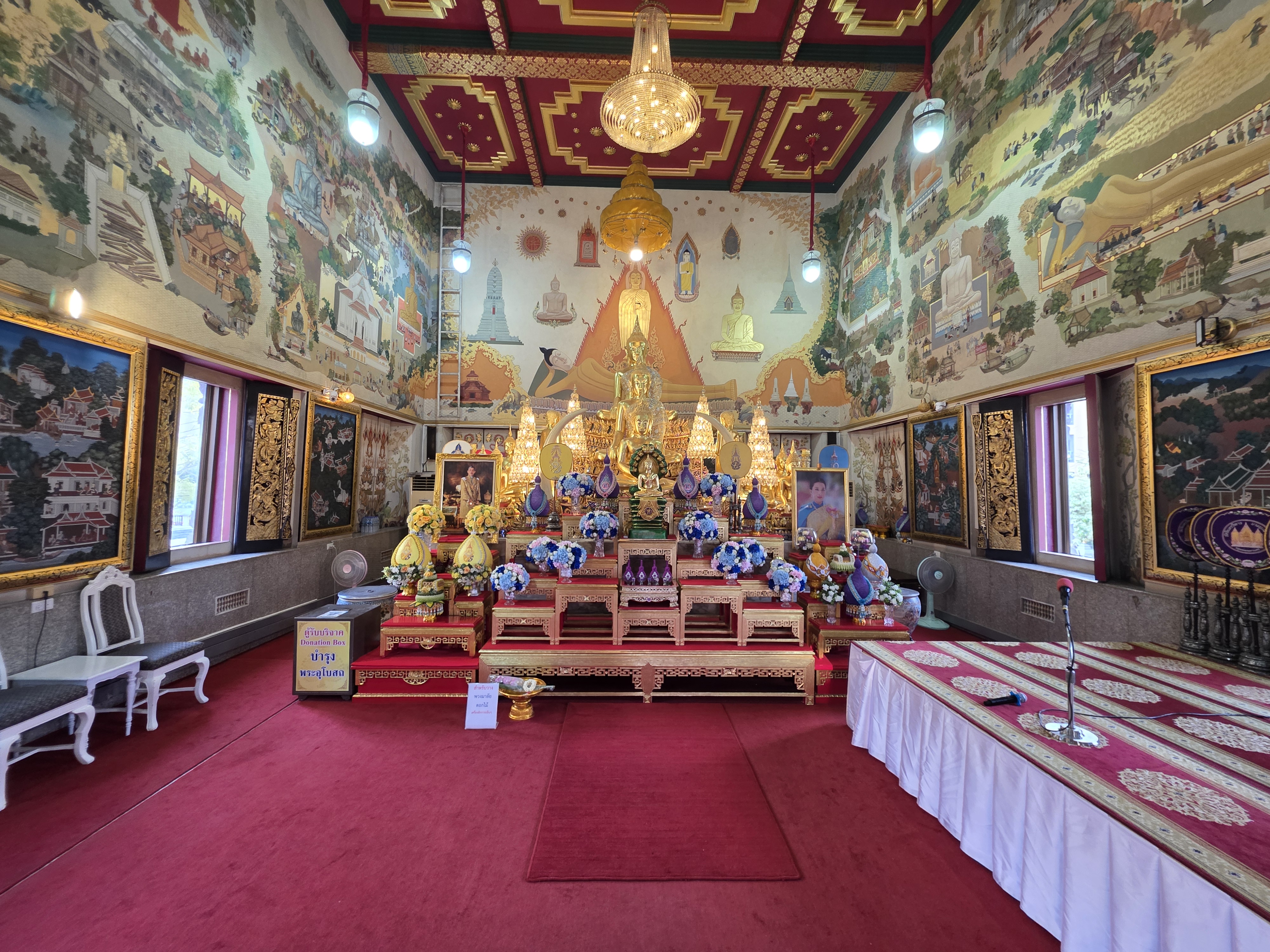
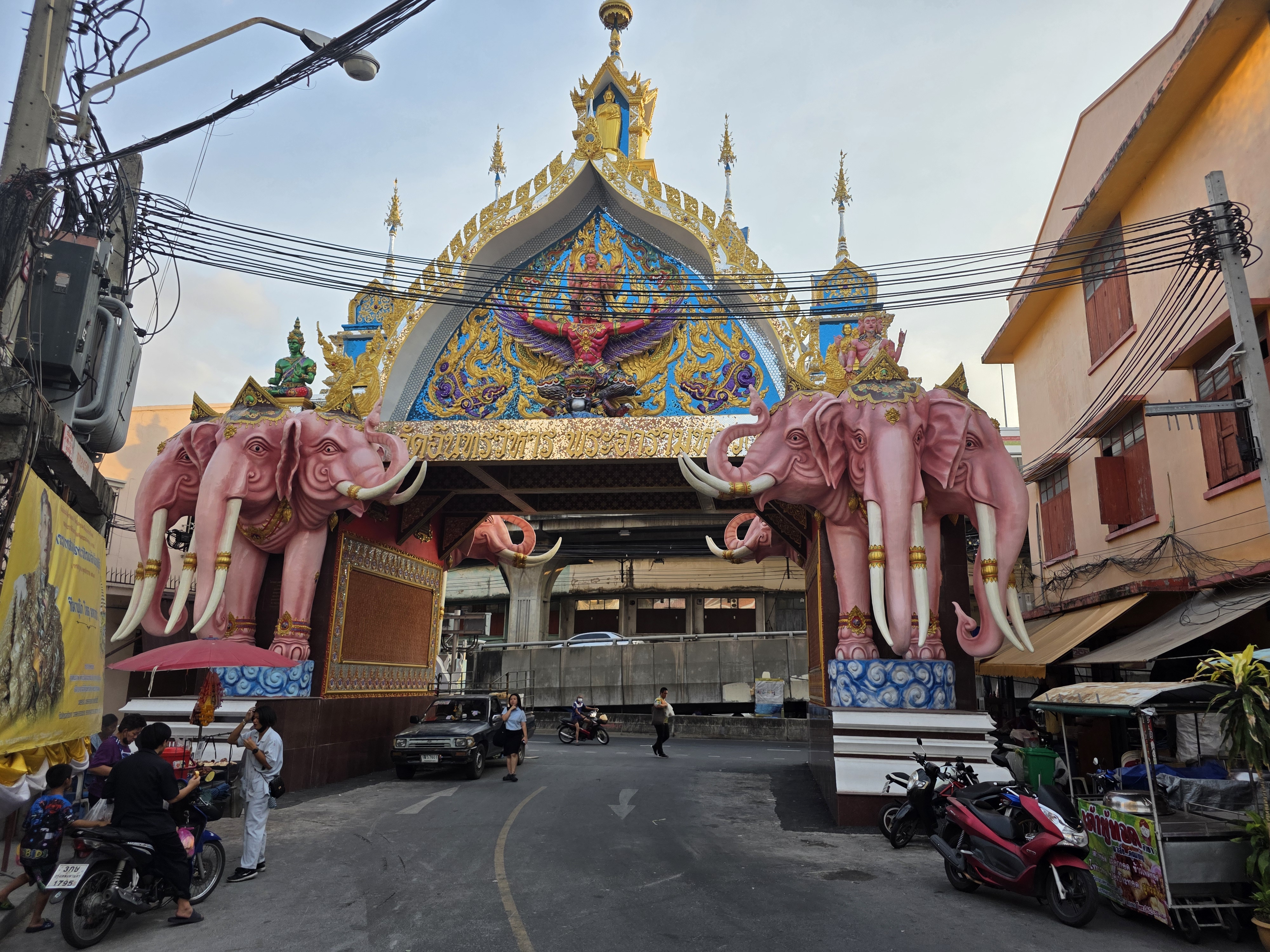
From the Golden Mount I made my way further north to Wat Intharawihan (Wat In) in the Bang Khun Phrom area, mostly because of the giant standing Buddha — Luang Pho To — that dominates the temple grounds and is visible from some distance away before you actually arrive. At 32 metres it's one of the tallest standing Buddhas in Thailand. The temple itself is less visited than Wat Pho and feels slightly quieter for it, the courtyard full of detail that rewards slowing down: a bronze multi-armed deity standing atop a globe engraved with the continents, a naga coiled around a bodhi tree, an intricately muralled prayer hall.
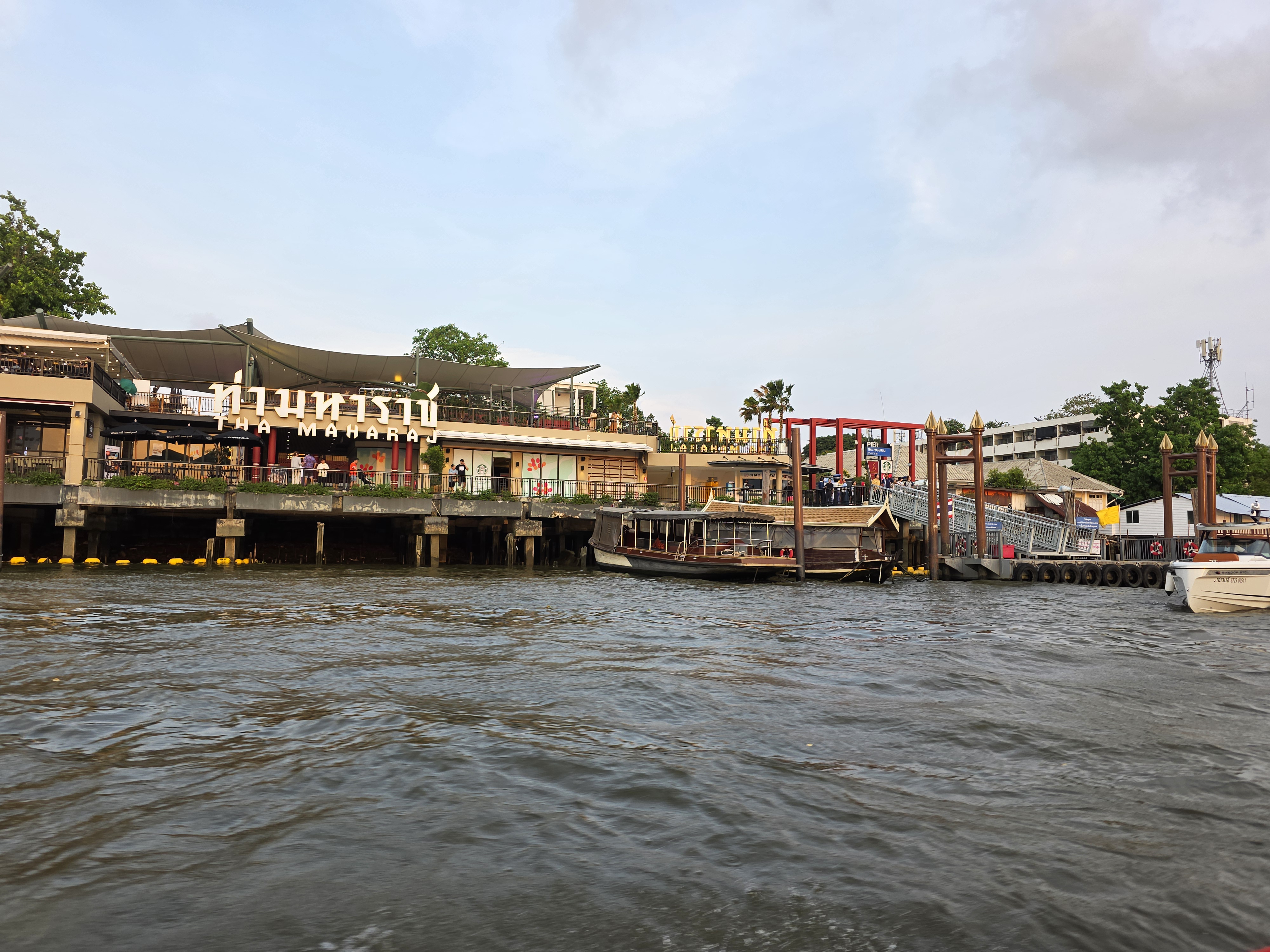
Between temples, a tuk-tuk; between neighbourhoods, a river boat. In the early evening I joined a private cruise from Tha Maharaj pier and rode it south as the light dropped — past the Grand Palace, past temples I hadn't visited, past the kind of riverside Bangkok that's harder to access from the streets. By the time the boat rounded the bend and Wat Arun came into view, fully lit against a darkening sky, it had already been a long day. It's one of those moments that would have been worth the whole trip by itself.
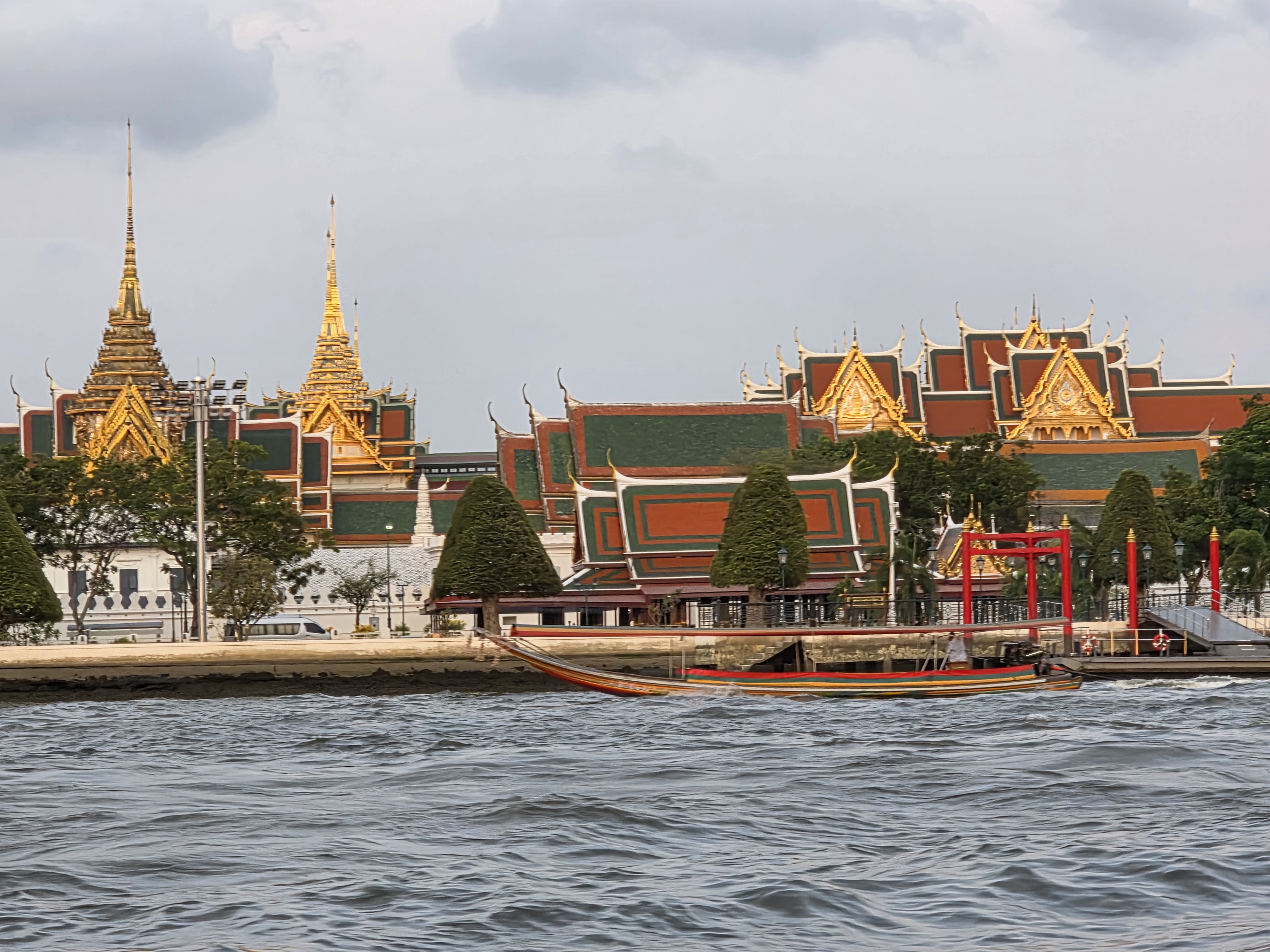
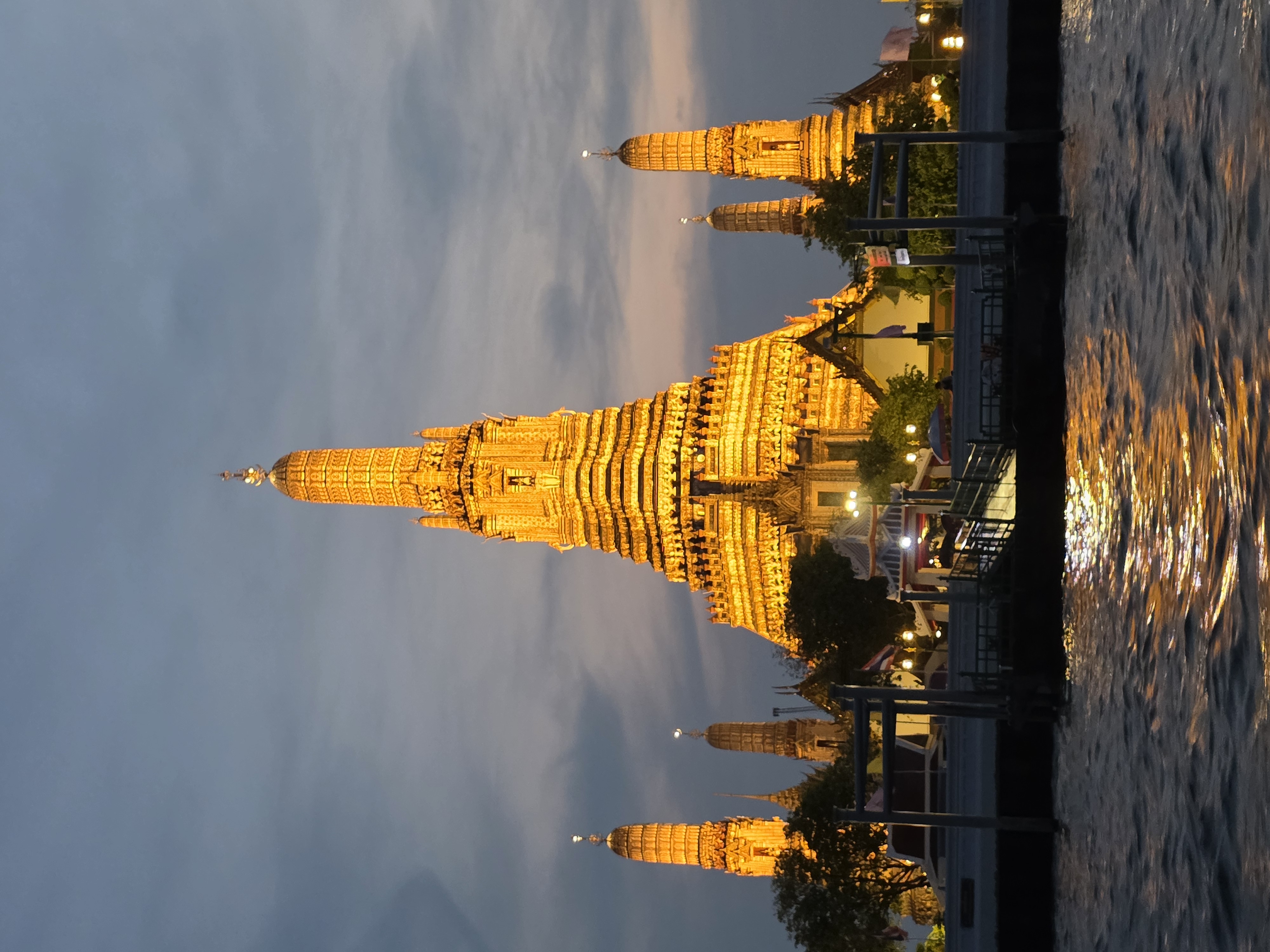
There was something quietly satisfying about the timing of the whole trip. Going in just after an earthquake felt a little reckless on paper, but it didn't feel that way on the ground — more like a calculated, well-checked risk that happened to pay off in cheap flights and a city with noticeably fewer tourists than usual. Bangkok had always been a name on a layover itinerary for me. Now it's somewhere I've actually been.